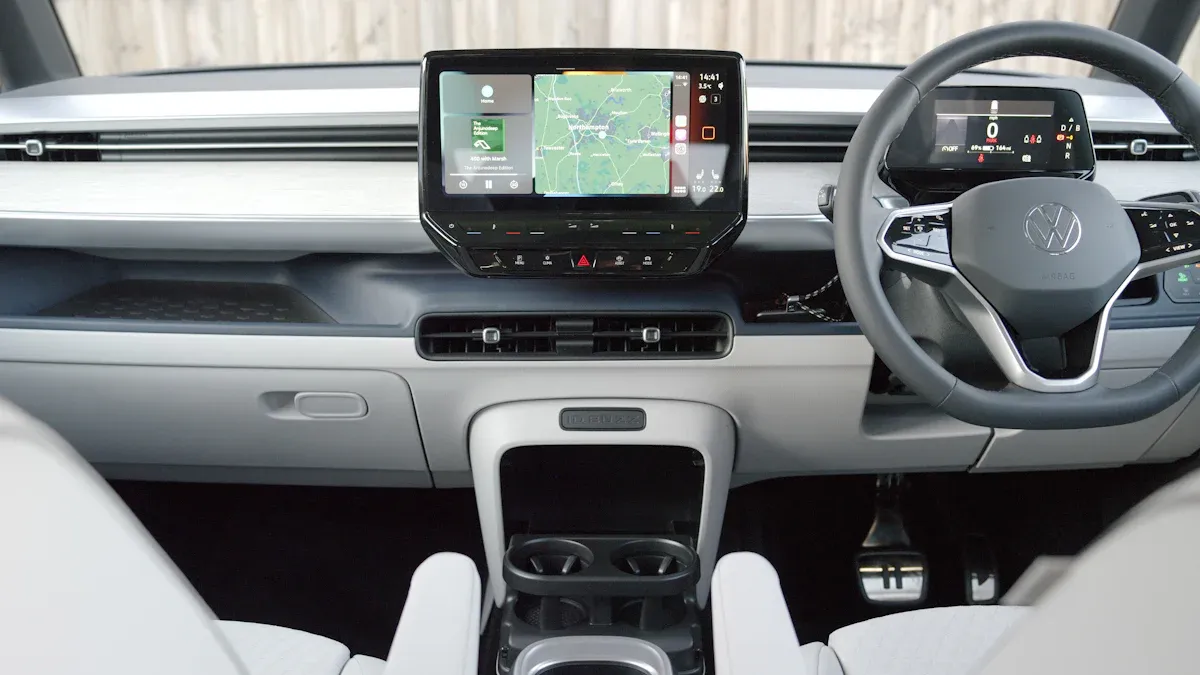
In emergency response, the margin between life and death is often measured in seconds. When a structural fire breaks out, a patient suffers a cardiac arrest, or a critical security breach occurs, dispatching emergency personnel is only the first step. The true challenge lies in the transit. Navigating congested urban grids, unpredictable suburban detours, and rural terrains demands more than standard GPS tracking.
Traditional navigation apps designed for daily commuters fall short when a multi-ton fire apparatus or a high-speed ambulance needs to navigate a chaotic environment safely. To bypass these limitations, modern police, fire, and emergency medical services rely on specialized, highly integrated navigation networks. These cutting-edge systems combine real-time telemetry, predictive data models, and local infrastructure automation to establish the fastest, safest paths to an incident scene.
The Limitations of Consumer-Grade Navigation
To understand the necessity of advanced emergency navigation, it helps to examine why standard consumer applications are insufficient for first responders.
-
Vehicle Dimensions and Weight Constraints: Standard GPS routing does not account for the physical constraints of an emergency vehicle. A fire engine can weigh up to thirty tons and stand over ten feet tall. Standard routing might direct a vehicle down a road with low-clearance bridges, weight-restricted overpasses, or sharp geometric turns that are physically impossible for a heavy apparatus to negotiate.
-
Lack of Real-Time Infrastructure Communication: Consumer applications rely heavily on crowdsourced data to detect traffic slowdowns. Emergency vehicles, however, need to actively manipulate infrastructure—such as changing traffic lights—and anticipate bottlenecks before they form.
-
Inability to Read Emergency Lanes and Restricted Zones: Standard software routes drivers strictly via legal, public thoroughfares. Emergency vehicles frequently need authorization to navigate pedestrian plazas, restricted access gates, one-way streets in reverse, or dedicated transit lanes.
Key Technologies Driving Emergency Navigation Systems
Modern emergency navigation is an ecosystem of interconnected hardware and software. It fuses satellite positioning with local municipal data to create a dynamic, responsive routing experience.
Preemption Systems and Intelligent Transportation Infrastructure
One of the most impactful advancements in emergency navigation is Traffic Signal Preemption. By integrating GPS navigation with municipal traffic management systems, the navigation computer calculates the exact arrival time of an emergency vehicle at an upcoming intersection.
Using localized radio frequencies, infrared emitters, or cellular vehicle-to-everything communication, the navigation system sends a secure request to the traffic light controller. The light coordinates to turn green for the approaching emergency vehicle while clearing out conflicting traffic lanes. This technology minimizes T-bone collisions at busy intersections and preserves transit momentum.
Dynamic, Multi-Agency Routing Engines
Emergency service navigation software utilizes advanced routing engines that ingest disparate data streams simultaneously. These engines do not simply look for the shortest geographic distance. They calculate routing based on live updates from municipal departments regarding active construction zones, drawbridge schedules, open-air public events, and weather-related road closures.
Furthermore, if multiple emergency units are responding to the same mass-casualty incident, the navigation software can distribute incoming vehicles across different routes. This prevents a convoy of ambulances from bottlenecking a single access point at the scene.
Automatic Vehicle Location and CAD Integration
The core of emergency navigation begins before the driver even turns the ignition. Modern fleets use Automatic Vehicle Location systems integrated directly into Computer-Aided Dispatch software.
When a dispatcher receives a distress call, the CAD system analyzes the precise real-time positions of all active units, accounting for their current operational status and specialized equipment onboard. The system identifies the absolute closest appropriate unit and instantly pushes the optimal navigation route directly to the vehicle’s mobile data terminal, eliminating manual address entry errors.
Enhancing Arriving Tactics: Micro-Navigation and Interior Mapping
The navigation challenge does not end when the vehicle arrives at the street address. Large hospital complexes, expansive university campuses, and sprawling apartment communities present a secondary navigation hurdle known as the “last mile” problem.
Campus and Alleyway Mapping
Cutting-edge emergency navigation tools incorporate highly detailed GIS mapping layers that go far beyond standard street views. These systems display hidden service roads, restricted fire lanes, underground parking dimensions, and exact gate code access points. For large commercial or industrial complexes, the system guides the driver to the specific loading dock or building entrance closest to the actual emergency, rather than just routing to the main property sign.
Hydrant and Utility Visualization for Fire Services
For fire apparatus, navigation screens feature overlay maps displaying the exact locations of municipal fire hydrants, specialized dry hydrants, and utility shut-off valves. The system can even color-code hydrants based on their water flow capacity. This allows commanders to plan their operational positioning and water supply lines while still in transit.
Operational Benefits of Advanced Navigation Systems
The implementation of these sophisticated navigation frameworks delivers tangible improvements to public safety metrics and fleet management.
Reduced Response Times and Lowered Accident Rates
The most direct benefit is the reduction of response times. Studies consistently show that integrated preemption and intelligent routing shave critical minutes off transit times. Concurrently, by automating traffic signals and routing vehicles away from high-risk intersections or gridlocked zones, the frequency of secondary accidents involving emergency vehicles drops significantly.
Decreased Cognitive Load on Responders
Driving an emergency vehicle under sirens and flashing lights is an incredibly high-stress task. Drivers must constantly monitor pedestrians, erratic civilian drivers, and changing road conditions. Advanced navigation systems utilize heads-up displays, clear auditory commands tailored for high-noise environments, and simplified visual interfaces. This minimizes distractions, allowing the operator to keep their eyes on the road and focus entirely on safe driving tactics.
The Frontier of Emergency Navigation
As autonomous vehicle technology and artificial intelligence continue to mature, emergency navigation systems are poised to become even more predictive. Future systems will leverage artificial intelligence to analyze historical traffic patterns, weather shifts, and localized city trends to predict traffic build-ups minutes before they occur.
Additionally, as cellular vehicle-to-everything communication becomes standard, emergency navigation systems will communicate directly with civilian vehicles on the road. The system will broadcast targeted alerts to the dashboards of nearby consumer cars, warning drivers of an approaching emergency vehicle well before the sirens are within earshot, allowing civilians to pull over safely and efficiently.
Frequently Asked Questions
How do emergency navigation systems function when GPS satellite signals are blocked by skyscrapers?
In dense urban environments, skyscrapers can cause GPS signal degradation or reflection, a phenomenon known as the urban canyon effect. To combat this, emergency vehicles use dead reckoning technology. This system utilizes built-in vehicle sensors, including gyroscopes, accelerometers, and wheel speed sensors, to calculate the vehicle’s precise position and movement relative to its last known GPS coordinate, ensuring uninterrupted navigation mapping.
Can these navigation systems override manual driver decisions during an active pursuit or emergency?
No, the navigation systems are strictly advisory and informational. The commanding officer or vehicle operator always retains total manual control over the vehicle’s path. While the system provides the mathematically fastest and safest route based on available data, real-world variables on the ground may force a driver to deviate from the system’s suggestions.
How frequently are the specialized maps within these emergency systems updated?
Unlike consumer maps which might update on a weekly or monthly basis, emergency GIS databases are frequently connected to live municipal data feeds. Changes regarding major road closures, newly constructed roundabouts, or altered bridge weight limits are often pushed to the fleet’s mobile data terminals daily or even in real time through secure cellular networks.
What happens to the navigation network if a city experiences a widespread cellular network outage?
Emergency navigation systems are built with multi-layered redundancies. If commercial cellular networks fail, the vehicles can switch to dedicated, encrypted public safety radio bands or private mesh networks to maintain communication with the dispatch center. Additionally, critical mapping data and routing algorithms are stored locally on the vehicle’s mobile hardware, allowing the navigation system to continue calculating routes offline.
Do these systems differentiate between the routing needs of a police cruiser and a fire engine?
Yes, the software profiles each vehicle individually based on its weight, height, turn radius, and function. A police cruiser may be routed through narrow alleys or historic streets to reach a scene quickly, whereas a massive aerial ladder truck will be given a completely different route that prioritizes wide avenues and structural overpasses capable of supporting its weight.
How do emergency navigation systems coordinate with private gated communities or security checkpoints?
Advanced emergency navigation systems integrate municipal databases that contain digital access codes, knox box locations, and electronic gate override frequencies. As the vehicle approaches a registered gated community, the navigation system can automatically transmit an authorized signal to open the security gate, preventing delays caused by manual code entry or physical barriers.