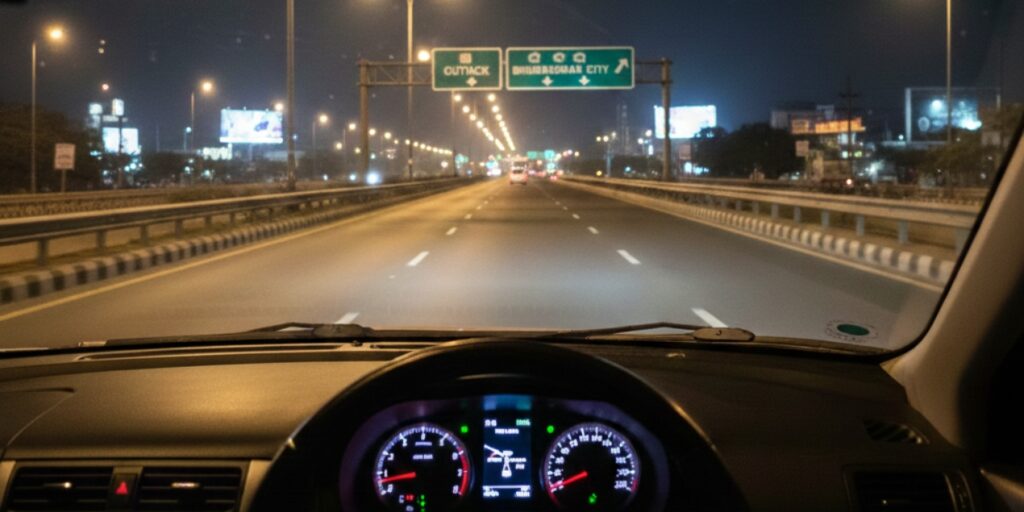
Operating a vehicle after dark presents a distinct set of physiological and environmental challenges that daytime drivers rarely encounter. Although traffic volume drops significantly during late-night hours, the risk of a fatal accident increases dramatically. The fundamental cause of this disparity is the severe limitation placed on human vision under low-light conditions.
As darkness falls, our depth perception, color recognition, and peripheral vision drop sharply. At the same time, drivers must navigate the blinding glare of oncoming headlights, poorly lit pedestrian crossings, and unpredictable wildlife. Managing these risks requires more than just turning on your high beams. By adopting proactive visual habits, modifying your cabin environment, and maintaining your vehicle’s optical systems, you can significantly reduce physical fatigue and mitigate nighttime road hazards.
Understanding the Physiology of Night Vision and Eye Strain
To effectively combat the exhaustion associated with night driving, it helps to understand how your eyes react to the dark. The human eye relies on two primary types of photoreceptors in the retina: cones, which detect color and fine details in bright light, and rods, which handle monochromatic vision and motion detection in low-light environments.
When you transition to night driving, your pupils dilate to let in as much ambient light as possible. However, a dilated eye is highly susceptible to spherical aberration, which can cause oncoming light sources to appear blurry or surrounded by halos. Eye strain occurs when your pupils must rapidly and continuously constrict and dilate in response to the flashing rhythm of bright headlights alternating with pitch-black stretches of asphalt. This constant adjustment overworks the ciliary muscles in the eye, leading to physical symptoms such as dryness, headaches, blurred vision, and slower reaction times.
Technical Adjustments to the Vehicle Cabin
Maximizing your safety on the road begins inside your car. Small environmental changes can drastically reduce the internal reflections that strain your eyes.
Dim the Instrument Cluster and Dashboard Displays
Modern vehicles feature large, vibrant infotainment screens and digital dashboards that emit significant amounts of blue light. When these screens are left at full daytime brightness, they act like miniature flashlights shining directly into your eyes. This intense internal light source forces your pupils to remain constricted, drastically reducing your ability to see objects in the dark road ahead. Use your vehicle’s instrument panel dimmer switch to lower all interior lighting to a soft, readable level. This balances the contrast between the inside of your car and the dark exterior world.
Clean Optical Surfaces Scrupulously
A windshield that looks perfectly clean during the day can reveal a blinding web of streaks when caught by oncoming headlights at night. Oils from your breath, plastic off-gassing from the dashboard, and dust accumulate on the interior glass surface over time, creating a haze that scatters light. Use a dedicated glass cleaner and a microfiber towel to clean both the interior and exterior surfaces of your windshield and side mirrors. Additionally, make sure your wiper blades are functional and that your washer fluid reservoir is full to clear away road grime in transit.
Adjust Your Interior Rearview Mirror
The glare from a large truck or SUV traveling directly behind you can bounce off your rearview mirror and temporarily blind you. If your vehicle is equipped with a manual rearview mirror, flip the small tab at the bottom to switch it to its night setting. This shifts the reflection angle, dimming the trailing headlights while still allowing you to track the vehicle’s position. If your car has an auto-dimming electronic mirror, ensure the sensor lens on the front and back of the housing is clear of obstructions so it can accurately detect glare.
Defensive Driving Tactics for Dark Roadways
Navigating the external hazards of the night requires a shift in your defensive driving habits and a heightened awareness of safety margins.
-
Lower Your Velocity and Increase Following Distance: Because your headlights only illuminate a specific distance ahead, driving too fast means you may not have enough time to stop when an obstacle appears. This dangerous scenario is known as over-driving your headlights. To prevent this, reduce your highway speed and extend your following distance behind the vehicle ahead from the standard three seconds to five or six seconds.
-
Shift Your Gaze to the Right Hand Edge of the Lane: When a vehicle with blinding, improperly aligned headlights approaches from the opposite direction, resist the natural urge to stare directly into the illumination. Instead, deliberately shift your eyes down and to the right side of your driving lane. Use the painted white fog line along the shoulder as a visual guide to maintain your lane positioning until the oncoming vehicle passes.
-
Utilize High Beams Strategically: High-beam headlights can illuminate up to four hundred feet ahead, doubling the sightlines of standard low beams. Activate them on unlit rural roads or highways whenever there is no oncoming traffic or vehicles immediately ahead. Remember to switch them off when you see oncoming headlights or the taillights of a vehicle you are trailing to prevent blinding other motorists.
Combatting Driver Fatigue and Environmental Hazards
Drowsiness is an invisible hazard that pairs destructively with low-light environments, slowing your cognitive processing and motor reflexes.
Recognize the Early Warning Signs of Exhaustion
Environmental darkness naturally triggers the brain to produce melatonin, the hormone responsible for sleep. If you find yourself yawning repeatedly, drifting across lane markers, missing road signs, or struggling to remember the last few miles driven, you are experiencing dangerous levels of driver fatigue. Do not rely on rolling down the window or turning up the radio volume to stay awake. The only effective remedy is to pull over at a well-lit rest stop or gas station to switch drivers, walk around for fresh air, or take a short nap.
Watch for Secondary Reflections from Wildlife
In rural or suburban areas, wildlife collisions spike during dusk and nighttime hours when animals are most active. Because animals are difficult to spot against dark foliage, scan the road shoulders for the reflection of your headlights bouncing off their eyes. Animal eyes often glow brightly in the dark. If you see a deer cross the road ahead, slow down immediately rather than accelerating after it passes, as these herd animals almost always travel in small groups.
Frequently Asked Questions
Can yellow-tinted night driving glasses help reduce headlight glare?
No, specialized yellow-tinted glasses are generally not recommended by optical experts for night driving. While they may slightly increase contrast in certain conditions, yellow lenses work by filtering out a portion of incoming light. Reducing the total amount of light entering an already dilated eye compromises your overall night vision and makes it harder to spot faint pedestrian silhouettes or low-contrast road hazards.
How often should a vehicle’s headlight assemblies be polished or replaced?
Headlight assemblies made of polycarbonate plastic degrade over time due to exposure to UV rays, atmospheric pollutants, and road debris. This creates a cloudy, yellowed surface that can block up to eighty percent of the headlight’s light output. If your headlight lenses appear hazy, you should treat them with a professional headlight restoration kit or replace the assemblies every three to five years to ensure maximum light projection.
Why do some oncoming headlights look significantly brighter and more distracting than others?
Many modern vehicles are equipped with Light Emitting Diode or High-Intensity Discharge lighting systems, which emit a crisp, white-blue light that mimics daylight. While these systems provide superior illumination for the driver, they can cause intense glare for oncoming traffic if the headlight housings are misaligned. A vehicle that has been lifted or heavily loaded in the cargo area will tilt upward, casting its beam directly into the eyes of oncoming motorists.
Does the age of a driver affect their nighttime visual capabilities?
Yes, aging naturally impacts night vision. As humans age, the muscles that control pupil dilation lose some flexibility, meaning an older driver’s eyes let in significantly less light than a younger driver’s eyes. Additionally, the eye lens naturally yellows over time, increasing glare sensitivity and making it harder to differentiate between subtle shades of dark grey and black on unlit roadways.
How should a driver adjust their mirrors to completely eliminate night blind spots?
To minimize blind spots and keep trailing headlights from reflecting directly into your eyes, adjust your side mirrors further outward. Lean your head against the driver’s side window and adjust the left mirror until you can barely see the rear flank of your car. Then, lean your head toward the center console and adjust the right mirror in the same manner. This widens your peripheral view and routes blinding light reflections away from your direct line of sight.
What is the safest way to react if you encounter a driver using high beams?
If an oncoming driver forgets to dim their high beams, do not flash your own high beams in retaliation, as this creates a dangerous situation where two approaching drivers are temporarily blinded. Instead, flash your high beams briefly from a distance to alert them. If they fail to respond, look down toward the right edge of the road, slow down slightly, and focus on keeping your vehicle centered safely in your lane until they pass.