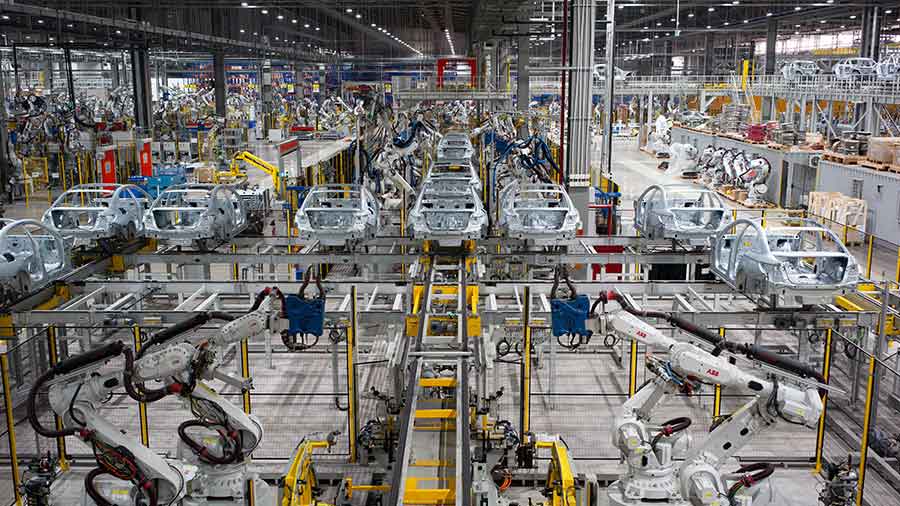
The automotive industry has undergone a remarkable transformation over the past century. What began as a modest innovation in mechanical engineering has now blossomed into one of the most influential sectors in the world, revolutionizing the way we live, work, and interact. From the era of horseless carriages to the dawn of electric vehicles (EVs), the journey of the automobile is a testament to human ingenuity, technological advancement, and societal change.
Enrolling in trade schools for auto mechanics offers hands-on training, certification, and job placement opportunities. These institutions teach both foundational and advanced automotive repair skills. A trade school diploma increases employability and sets up aspiring mechanics for long-term success in a constantly evolving automotive industry.
The Birth of the Automobile: A Revolution on Wheels
In the late 19th century, the world was on the cusp of a technological revolution, and the automobile was its crown jewel. The concept of self-propelling vehicles was not entirely new, with various inventors experimenting with steam-powered carriages long before the modern automobile emerged. However, it was Karl Benz, a German engineer, who is widely credited with creating the first true automobile in 1885. His Benz Patent-Motorwagen, powered by an internal combustion engine, is considered the world’s first practical automobile.
Benz’s invention paved the way for a multitude of innovations in the automotive world. As manufacturers began to refine the internal combustion engine, cars became faster, more reliable, and accessible to a growing middle class. In the early 20th century, Henry Ford revolutionized the industry with the introduction of assembly line production, which significantly lowered the cost of manufacturing and made cars affordable for the masses. The Model T, often referred to as the “car that put America on wheels,” became a symbol of progress and accessibility.
The Post-War Boom: Cars as Cultural Icons
The end of World War II marked a period of economic growth and social change in many parts of the world. In the United States, the automobile became more than just a means of transportation—it became a symbol of freedom, status, and individualism. The booming economy, combined with advances in car design and technology, led to the emergence of iconic vehicles such as the Chevrolet Corvette and Ford Mustang. These cars embodied the spirit of the American dream: sleek, powerful, and distinctly stylish.
During this time, automotive manufacturers began to experiment with new materials, designs, and performance features. The introduction of power steering, automatic transmissions, and improved safety features made cars more comfortable and user-friendly. Cars became faster, more fuel-efficient, and increasingly luxurious, catering to an ever-demanding consumer market. It was a golden age for car culture, where road trips, car clubs, and auto shows became integral parts of social life.
The Environmental Awakening: A Shift Toward Sustainability
As the world entered the late 20th century, however, the automotive industry faced a growing wave of environmental consciousness. The widespread use of fossil fuels began to raise concerns about air pollution, resource depletion, and climate change. The oil crises of the 1970s underscored the vulnerability of global fuel supplies, prompting a shift toward more sustainable practices in the automotive industry.
This period marked the rise of fuel-efficient cars and the introduction of emission regulations aimed at reducing the environmental impact of vehicles. The Japanese automakers, particularly Toyota and Honda, gained significant market share by focusing on smaller, more fuel-efficient models, which appealed to consumers looking for economical alternatives to the gas-guzzling cars of the past. Meanwhile, European manufacturers began emphasizing engineering excellence, safety, and environmental standards, further driving the global automotive shift.
The Electric Revolution: Powering the Future
In the 21st century, the automotive industry has embarked on its most transformative journey yet: the transition from fossil fuel-powered cars to electric vehicles (EVs). The development of electric powertrains, combined with advancements in battery technology, has opened new possibilities for clean, sustainable transportation. While electric cars were once viewed as impractical and niche, advancements in range, charging infrastructure, and affordability have brought EVs to the mainstream.
Tesla, founded by Elon Musk in 2003, played a pivotal role in this revolution, proving that electric cars could be both high-performance and desirable. The company’s electric vehicles have redefined the market, blending cutting-edge technology, impressive range, and sleek design. Tesla’s success has encouraged other automakers, both established giants and newcomers, to invest heavily in electric vehicle development. Companies like General Motors, Ford, Volkswagen, and Nissan have introduced their own EV models, signaling a shift in the entire industry’s focus.
The rise of electric cars has also prompted significant changes in the automotive supply chain. Traditional internal combustion engine (ICE) parts like carburetors, fuel injectors, and exhaust systems are no longer needed, while the demand for lithium-ion batteries, electric motors, and charging stations has surged. In response, companies like Panasonic, LG Chem, and CATL have emerged as key players in the global battery supply market, driving further innovation in energy storage technologies.
In addition to environmental benefits, electric vehicles offer other advantages, such as lower maintenance costs and quieter operation. Moreover, the growing availability of renewable energy sources, such as solar and wind power, has made the prospect of “clean” electric cars even more appealing. As governments around the world introduce stricter emissions standards and offer incentives for EV adoption, the transition to electric vehicles seems not only inevitable but also urgent.
The Road Ahead: Autonomous Vehicles and Smart Technology
As electric vehicles reshape the automotive landscape, another wave of innovation is quietly taking place: the development of autonomous or self-driving cars. Using artificial intelligence, machine learning, and an array of sensors, autonomous vehicles are poised to revolutionize transportation once again. While fully autonomous vehicles are still in the experimental stages, many experts believe that self-driving technology will eventually become commonplace on the roads.
Autonomous cars promise to reduce traffic accidents, improve road safety, and enhance the overall efficiency of transportation networks. By eliminating human error, they could significantly reduce the number of accidents caused by distracted or impaired drivers. Moreover, autonomous vehicles have the potential to drastically reduce traffic congestion by optimizing driving patterns and enabling better coordination between cars.
The integration of smart technologies, such as connected cars, is also transforming the way vehicles interact with the world. With features like real-time navigation, remote diagnostics, and advanced infotainment systems, cars are becoming increasingly “intelligent.” These innovations are not only enhancing the driving experience but also opening new possibilities for how vehicles can communicate with each other and with the surrounding infrastructure.
Conclusion: The Automotive Industry’s Journey Into the Future
The automotive industry has come a long way from its humble beginnings. From the Model T to the Tesla Model 3, cars have evolved into sophisticated machines that embody the latest in engineering, design, and technology. As the industry embraces electric propulsion, autonomous driving, and smart technology, the future of automobiles looks brighter than ever. With sustainability at the forefront of innovation and technological progress accelerating at an unprecedented pace, the next chapter of the automotive story promises to be as transformative as the last.
As we navigate this exciting transition, one thing is clear: the automobile will continue to play a central role in shaping our lives, our economies, and our planet for generations to come. Whether we’re driving down a sunlit highway in an electric sedan or relying on an autonomous vehicle to get us from point A to point B, the road ahead is filled with boundless possibilities.