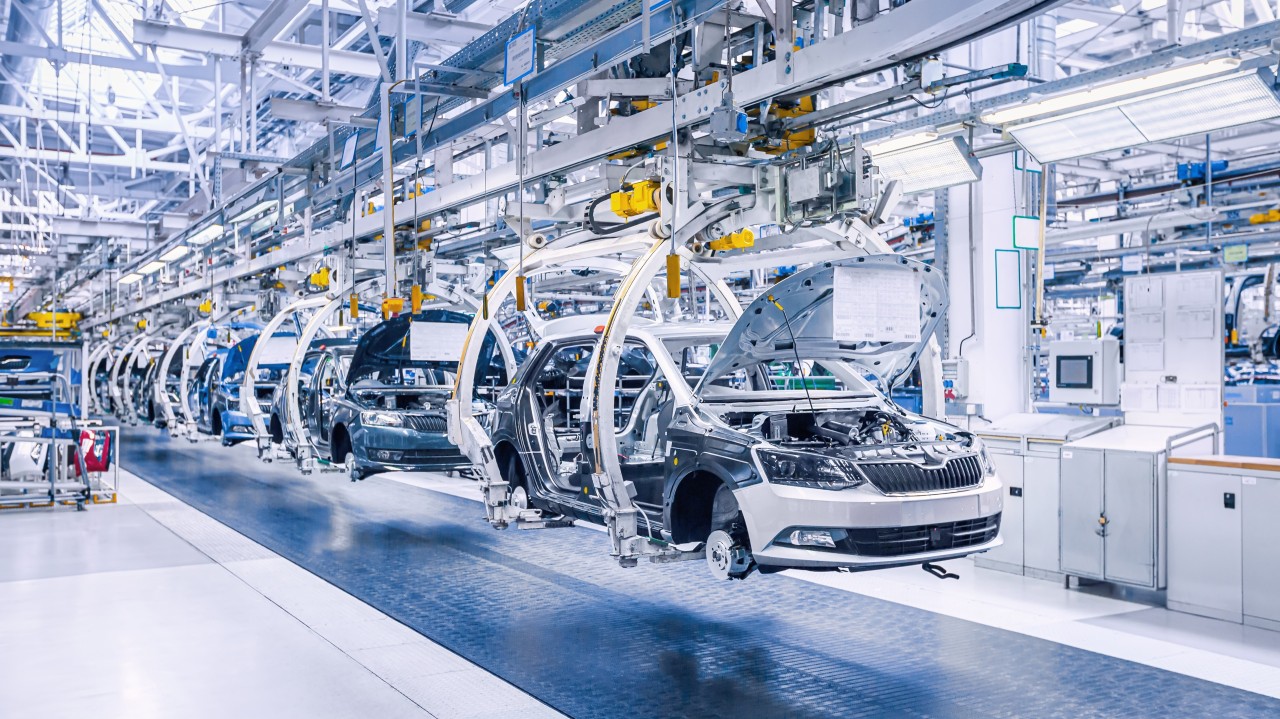
The automotive industry is undergoing its most significant transformation since the invention of the assembly line. For over a century, heavy steel was the undisputed backbone of vehicle manufacturing. It provided the necessary structural integrity, crash resistance, and affordability that allowed mass production to thrive. However, the modern automotive landscape is no longer governed solely by traditional manufacturing convenience. Today, automakers are caught in a demanding intersection of stringent global emission standards, rapidly evolving consumer expectations, and the massive industry-wide shift toward electrification.
To navigate these challenges, automotive engineering has had to fundamentally rethink vehicle design. The solution does not lie in changing the engine alone, but in changing the very substance of the vehicle itself. This is why lightweight construction materials have transitioned from a premium luxury feature to an absolute engineering necessity for modern vehicles.
The Core Drivers Behind the Lightweight Revolution
The push toward lightweight materials is not a design trend; it is a direct response to physics, environmental regulations, and consumer demands. When a vehicle weighs less, it requires less energy to move, accelerates more efficiently, and handles with greater agility.
Stringent Environmental Regulations and Emission Standards
Governments worldwide are continuously tightening corporate average fuel economy and emission standards. Automakers face massive financial penalties if their vehicle fleets exceed strict carbon dioxide limits. Because a significant percentage of a vehicle’s fuel consumption is directly tied to its inertia, reducing total curb weight is one of the most effective strategies to lower tailpipe emissions in internal combustion engines.
The Electrification Paradigm Shift
The rise of electric vehicles has completely rewritten the rules of automotive weight management. Electric vehicle battery packs are notoriously heavy, often adding hundreds of pounds to a vehicle compared to its gas-powered counterparts. To offset this immense battery weight and combat “range anxiety”—the consumer fear of running out of power before reaching a destination—manufacturers must shave weight from every other possible component of the vehicle. Every kilogram saved in the chassis, body-in-white, or interior trim translates directly into extended battery range.
Advanced Materials Reshaping Modern Vehicles
To achieve substantial weight reduction without compromising safety, engineers have moved away from conventional mild steel toward an array of advanced, high-performance materials. Each material brings unique advantages and specific manufacturing challenges to the factory floor.
1. Advanced High-Strength Steels (AHSS)
Steel has not disappeared from the automotive world; rather, it has evolved. Advanced High-Strength Steels and Ultra-High-Strength Steels are engineered to have incredibly high tensile strength. This allows manufacturers to use much thinner sheets of steel to construct components like safety cages, pillars, and side rails. The result is a component that provides equal or superior crash protection compared to traditional steel while weighing up to 25 to 30 percent less.
2. Aluminum Alloys
Aluminum has emerged as one of the primary substitutes for traditional steel in modern vehicles. It offers an exceptional strength-to-weight ratio, high corrosion resistance, and excellent energy absorption capabilities during a crash. Automakers utilize aluminum for engine blocks, suspension components, hoods, doors, and increasingly for entire vehicle architectures. Using aluminum can reduce the weight of specific sub-assemblies by up to 40 to 50 percent compared to standard steel.
3. Carbon Fiber Reinforced Polymers (CFRP)
Once reserved exclusively for aerospace engineering and high-end motorsports, Carbon Fiber Reinforced Polymers are gradually finding their way into mainstream automotive applications. CFRP is incredibly strong and remarkably light, offering weight savings of up to 60 percent compared to steel. While high production costs and longer cycle times originally limited its use, advancements in manufacturing have allowed for its integration into critical structural areas, such as the passenger cell roofs, driveshafts, and core reinforcement beams.
4. Magnesium Alloys
Magnesium is the lightest of all structural metals, being roughly 33 percent lighter than aluminum and 75 percent lighter than steel. It is increasingly utilized for steering columns, instrument panel support beams, liftgate structures, and transmission cases. While magnesium requires specialized casting techniques and corrosion prevention coatings, its ability to consolidate multiple complex parts into a single lightweight casting makes it highly valuable.
5. Advanced Plastics and Bio-Composites
Beyond the structural frame, modern vehicles utilize high-performance plastics and bio-based composites for interior trims, bumper fascias, under-hood components, and fluid reservoirs. By replacing glass fibers with natural fibers like hemp or flax in plastic matrices, manufacturers can reduce component weight while improving the sustainability footprint of the vehicle interior.
The Multi-Faceted Benefits of Weight Reduction
The integration of these advanced materials alters the entire driving dynamics, financial operation, and safety profile of a modern vehicle.
Enhanced Vehicle Performance and Handling
Lightweighting directly improves the power-to-weight ratio of a vehicle. With less mass to move, vehicles accelerate faster and stop within shorter distances. Furthermore, reducing weight at the extremities of the vehicle—such as using aluminum or carbon fiber for the roof—lowers the center of gravity. This significantly reduces body roll during cornering and improves overall steering responsiveness and handling agility.
Secondary Weight Savings and Compounding Benefits
One of the most profound aspects of lightweight construction is the compounding effect, often referred to as secondary weight savings. When the body and chassis of a vehicle become lighter, the demands on other systems decrease. This allows engineers to downsize other major components:
-
Braking Systems: Lighter vehicles require smaller, lighter brake rotors and calipers to stop safely.
-
Suspension: Springs, shock absorbers, and control arms can be made smaller and lighter because they support less mass.
-
Powertrain: Smaller, more efficient engines or smaller battery packs can achieve the same performance targets as larger units in a heavier vehicle.
Uncompromised Crash Safety
A common misconception is that lighter vehicles are inherently less safe than heavy, steel-dominated cars. In reality, lightweight construction materials like AHSS and aluminum are designed to absorb and dissipate kinetic energy more effectively during a collision. Advanced engineering software allows manufacturers to design specific crumple zones that collapse predictably, routing impact forces away from the passenger cabin. Because a lighter vehicle carries less kinetic energy into an impact, the total force that needs to be managed during a crash is also reduced.
Engineering and Manufacturing Challenges
Despite the clear advantages, transitioning to lightweight materials introduces a complex set of engineering hurdles that manufacturers must overcome.
Material Cost and Supply Chain Readiness
Advanced materials like carbon fiber, magnesium, and specialized aluminum alloys are significantly more expensive than traditional mild steel. The raw material costs, combined with the need for specialized manufacturing equipment, can drive up the initial retail price of the vehicle. Automakers must carefully balance the cost-per-kilogram saved against the market value of the vehicle.
Dissimilar Material Joining
When a vehicle is built using a mix of steel, aluminum, and carbon fiber, traditional spot welding is no longer sufficient. Joining aluminum to steel, for instance, can trigger galvanic corrosion if the metals come into direct contact. To solve this, the industry has had to pioneer advanced joining techniques, including:
-
Structural adhesives and bonding agents
-
Self-piercing rivets
-
Flow-drill screws
-
Laser welding variations
Recycling and Circular Economy Logistics
As sustainability becomes a holistic goal, the end-of-life recycling of vehicles is a growing concern. While steel and aluminum are highly recyclable, composite materials like carbon fiber reinforced polymers are notoriously difficult to recycle efficiently. Developing cost-effective methods to reclaim and reuse these advanced materials at the end of a vehicle’s life cycle remains an ongoing challenge for the industry.
Frequently Asked Questions
Do lightweight vehicles wear out tires faster due to different weight distributions?
No, lightweight vehicles generally experience less tire wear. Because the overall mass of the vehicle is reduced, there is less friction and force exerted on the tires during acceleration, braking, and cornering. However, because electric vehicles carry heavy battery packs, maintaining a lightweight body structure is essential to prevent the excessive tire wear that typically plagues heavy EVs.
Does the use of lightweight materials increase the insurance premiums of a vehicle?
It can, depending on the specific materials used. Structural components made from carbon fiber or specialized aluminum alloys often require certified repair facilities and specialized techniques if they are damaged in an accident. Because these parts are sometimes replaced rather than repaired, insurance companies may adjust premiums upward for vehicles that utilize high amounts of exotic exotic materials in impact-prone zones.
How do temperature fluctuations affect vehicles made of mixed lightweight materials?
Different materials expand and contract at different rates when exposed to heat and cold, a phenomenon known as thermal expansion mismatch. To prevent structural warping, popping, or stress fractures where different materials meet, automotive engineers utilize highly flexible structural adhesives and specialized expansion joints that accommodate these minute movements without sacrificing rigidity.
Are bio-composites used in lightweighting as durable as traditional plastics?
Yes, modern bio-composites undergo rigorous automotive testing to ensure they meet strict standards for durability, UV resistance, moisture resistance, and flame retardancy. When natural fibers are combined with advanced polymer matrices, they offer comparable longevity to standard petroleum-based plastics while providing superior weight reduction and a smaller environmental footprint.
Why isn’t titanium used more frequently in lightweight vehicle construction?
While titanium possesses an incredible strength-to-weight ratio and exceptional corrosion resistance, it is extremely expensive to extract and refine. Furthermore, titanium is incredibly difficult to machine, stamp, and weld using standard mass-production automotive infrastructure. Consequently, its use is strictly limited to ultra-high-performance supercars and specific high-stress racing components.
Do lightweight materials affect the cabin noise and vibration of a vehicle?
Thinner, lighter structural panels can potentially allow more road and engine noise to enter the passenger cabin. To counteract this, noise, vibration, and harshness engineers utilize targeted acoustic dampening materials, liquid-applied sound deadeners, and active noise-cancellation systems. These innovations ensure that the vehicle remains quiet and refined without reintroducing the weight saved by the structural materials.